Earth Day SVG: You Can Make a Difference in Every Stitch
As an embroidery designer who has worked with hundreds of themed graphics, I’m always drawn to designs that feel both fresh and usable right out of the folder. The Earth Day Svg Design, You Can Make a immediately caught my attention because it doesn’t rely on vague nature clip art. It makes a direct, human statement — the kind of message that customers want to wear, carry, or display without second-guessing. When I opened the ZIP and saw the clean vector layout and the bold text treatment, I started mentally testing it on different blanks: a sturdy canvas tote, a soft crewneck sweatshirt, even a linen apron. That’s always my first instinct, because pretty graphics don’t always translate into beautiful stitches. This one, however, has the structure and clarity that an embroidery machine can actually work with.
First Impressions: A Clean Message Ready for Thread
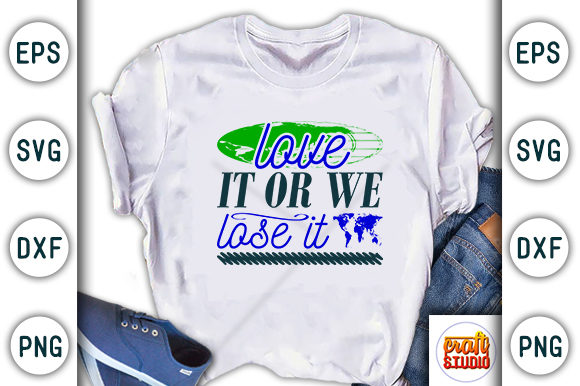
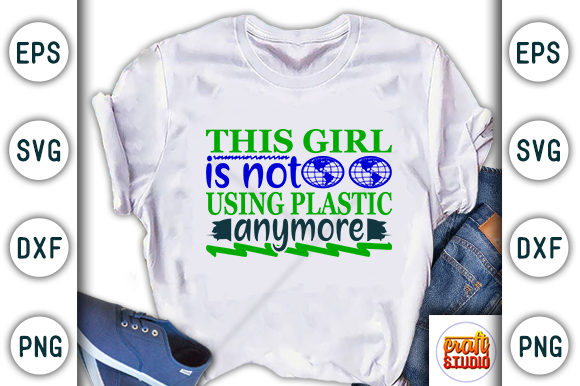
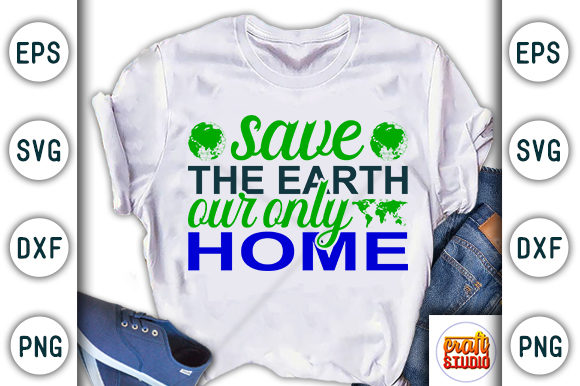
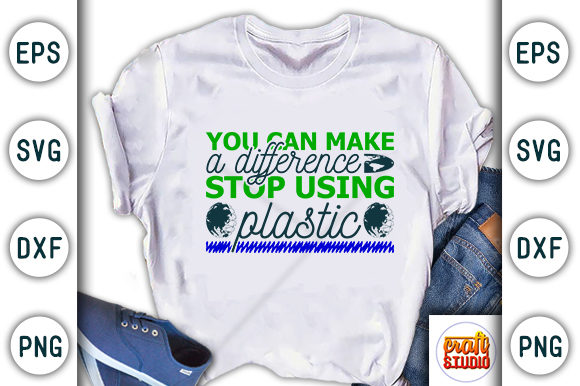
The mood of Earth Day Svg Design, You Can Make a is quietly empowering. It doesn’t shout, but it doesn’t mumble either. The design’s shape — likely a circular earth motif paired with the phrase “You can make a difference, stop using plastic” — feels balanced and intentional. There’s enough white space around the lettering to let each word breathe, which is something I always look for before converting a graphic into a machine embroidery design. Crowded typefaces and dense illustrations turn into a muddy mess under thread. Here, the visual personality is modern and editorial, with a hint of hand-drawn charm that gives it warmth. That matters when you’re stitching for baby clothes, canvas patches, or boutique home goods; overly slick graphics can feel cold once they hit textured fabric, while this one reads as approachable and sincere.
The detail level sits in a sweet spot. The continents likely appear as simplified shapes, which means I can run them as fill stitch areas with a satin stitch outline without worrying about losing tiny islands to a spread of dense thread. The text promises to be legible at medium hoop sizes, but I know I’ll have to keep an eye on the phrase “stop using plastic” — more on that when we talk about small hoops. For now, as a visual starting point, this Earth Day Svg Design gives me a solid foundation for applique design interpretations, layered embroidery, or even a clean single-color stitchout that lets the message lead.
Envisioning the Design on a Custom Tote Bag
Let me share the real project that got me excited. I’m currently prepping a limited run of custom embroidered tote bags for a local eco-market. The organizer wanted a handmade product that people would not just use but feel proud carrying around. I tested a few concepts in my mind before landing on this graphic. The tote is natural cotton canvas, sturdy enough to hold heavy stitches, and the flat panel gave me a generous embroidery area.
In my head, I digitized the earth portion as a two-tone fill stitch with a narrow satin stitch border for definition. The text — “You can make a difference, stop using plastic” — would run just below the globe in a clean sans serif digitized at about 0.16 inches of satin width for clear reading. My plan was to use a medium-weight cutaway stabilizer to prevent puckering and to keep the tote’s shape intact after many washes. The color palette I chose was deep teal and warm ochre, earthy but bright enough to pop against the unbleached canvas. Even before I threaded the machine, I could picture how good this Earth Day Svg Design, You Can Make a would look as a tote bag design — it instantly elevated the item from a plain bag to a small statement of purpose.
How the Design Behaves in Real Embroidery Situations
Not every graphic works on every garment, but this one adapts surprisingly well if you make smart choices. On a sweatshirt embroidery, the dense fill of the earth might need a knock-down stitch underneath to sit on top of the fleece. On a crisp cotton T-shirt, I’d use a lightweight cutaway stabilizer and back the design with a soft webbing to keep the back of the stitches comfortable against the skin. The positive side is that the message stays strong even if I simplify it — remove the globe and keep the text as a standalone embroidered patch, and it’s still a conversation starter.
For baby embroidery, this Earth Day Svg Design could work beautifully on a tiny organic onesie, but I’d enlarge the text block slightly and reduce the number of colors to keep the stitch count low. You don’t want heavy embroidery pressing against an infant’s delicate skin. On a cap, the curve adds a challenge: the circular earth motif might distort on the rounded front panel. I’d only attempt that on a structured cap with a flat embroidery area and use a bit of pull compensation during digitizing. Aprons and kitchen towels are safer territory — the flat weave holds satin stitch details beautifully and the design’s eco-message feels right at home in a kitchen that values sustainability.
When to Pause: Fabric, Hoop Size, and Stitch Pitfalls
I need to be honest about where Earth Day Svg Design, You Can Make a asks for caution. Small hoop sizes, anything under 4x4 inches, will compromise the lettering. The phrase is meaningful but fairly long, and when you shrink it to fit a baby bib or a sunglasses pouch, the inner counters of the letters close up and the stitching becomes a blur. I learned this the hard way with many text-heavy designs — what looks crisp on a mockup turns into a thread blob if the font size dips below 0.15 inches of satin width. So for tiny blanks, I’d isolate the “stop using plastic” line and create a mini embroidered patch instead.
Textured fabrics like terry cloth or loosely woven linen can also be tricky. The fill stitch of the earth motif might sink unevenly, causing uneven coverage. For those, I’d use a water-soluble topping to smooth the surface before stitching. Stretchy fabrics, think performance tees or thin knits, demand strong stabilizer support; I’d hoop a film-backed cutaway and maybe add a second layer of fusible mesh for extra stability. Dark fabric is another factor. If you’re stitching the design on black tote bags, the green and blue threads will look dull unless you lay down a white underbase. I always run a test stitch on a scrap of the exact dark fabric before committing to a whole batch.
And if you plan to sell items with this design, consider how the thread will hold up after dozens of washes. A commercial embroidery run for a boutique product needs top-quality polyester thread to resist fading and abrasion. The design’s dense text areas should be checked for pull compensation, too, so the letters don’t shift out of alignment after a few laundry cycles.
Adding Visual Strength to Finished Products
When I think about what makes a customer stop scrolling on Etsy seller pages or linger at a craft fair booth, it’s rarely the complexity of the design. It’s the clarity of the message and the quality of the stitching. Earth Day Svg Design, You Can Make a taps into a sentiment that people already feel, so the visual appeal comes naturally. But stitching it well is what builds trust. A clean, even satin stitch on the text, a smooth outline on the earth, and consistent thread tension tell the buyer that this isn’t a rushed piece of merch — it’s a considered handmade product.
From a branding perspective, I can see this design unifying a small collection. Stitch it on tote bags, matching zipper pouches, and a canvas apron, and you’ve got a cohesive eco-themed set that works for a boutique shop or a giftable package. The graphic’s simplicity also makes it perfect for printable mockups. Using the PNG file, I can create a realistic preview on a mockup sweatshirt, and the crisp lines will sell the idea before I even digitize the embroidery file. That’s a bonus for any small shop product launch.
Giftability is another underrated factor. A tote with this design feels personal and thoughtful for a teacher, a sustainability-minded friend, or as a holiday gift. It’s not generic; it says something about the giver and the recipient. That emotional layer often translates into repeat orders and positive reviews, which is what every creative business owner wants.
A Designer’s Pre-Stitch Checklist
Before I ever sell a single finished product, I run through my own mental checklist with every new design. For Earth Day Svg Design, You Can Make a, that list looks like this:
- I digitize a test version and stitch it on the exact fabric-blank combination I’ll use for customers. For a tote, that means canvas scrap with a cutaway stabilizer.
- I check the stitch density on the globe fill. Too high, and the fabric gets stiff and rippled; too low, and the thread coverage looks thin. I adjust until the satin border just barely overlaps the fill edge.
- I compare a black and white version of the digitized design on screen to see if the text holds enough contrast. If I ever offer a monochrome product, this step is non-negotiable.
- I test on both light and dark substrates. On dark fabric, I look for thread bleeding under the white underbase and make sure the top colors stay bright.
- I check the small details. The letters in “stop using plastic” are the most delicate. If any letter pairing is too tight, I manually adjust the node spacing in my digitizing software.
- I review the hoop size. For a standard tote, a 5x7 inch hoop gives me enough breathing room; for a sweatshirt, I may go up to 6x10 to include the full design without cramping.
- I confirm the licensing on the original Graphics product. Since this is a T-Shirt Designs category item, the seller likely allows creation of physical products for sale, but I always double-check the commercial use terms. The last thing a craft business needs is a licensing headache.
Finally, I never skip a wash test. After the stitch-out, I toss the sample through a normal laundry cycle and look for loose threads, color bleeding, or dimensional distortion. If it survives, I feel confident listing the finished piece.
Final Thoughts From the Embroidery Frame
After all the testing and imagining, I keep coming back to one thought: Earth Day Svg Design, You Can Make a is a graphic that genuinely earns its place in an embroiderer’s library. It’s not a pre-digitized embroidery file, so you’ll need to do the conversion work or partner with a digitizer, but the clean lines and meaningful text make that process straightforward. The end result, a stitched product that reminds someone they can make a difference, carries more weight than a generic floral or abstract pattern.
Whether you’re a small shop product owner preparing for Earth Month, an Etsy seller expanding a sustainable line, or a hobbyist stitching a personal gift, the design holds up well under honest needle-and-thread scrutiny. It has the message, the shape, and the adaptability that real embroidery projects demand. Trust your fabric tests, mind the hoop size, and you’ll have a finished item that feels both professional and deeply personal. That’s the kind of work I’m always proud to put my name on.